What This Year's Drought Emergency Actually Means for Mountain Home Acreage Buyers
October 1, 2026
October 1, 2026
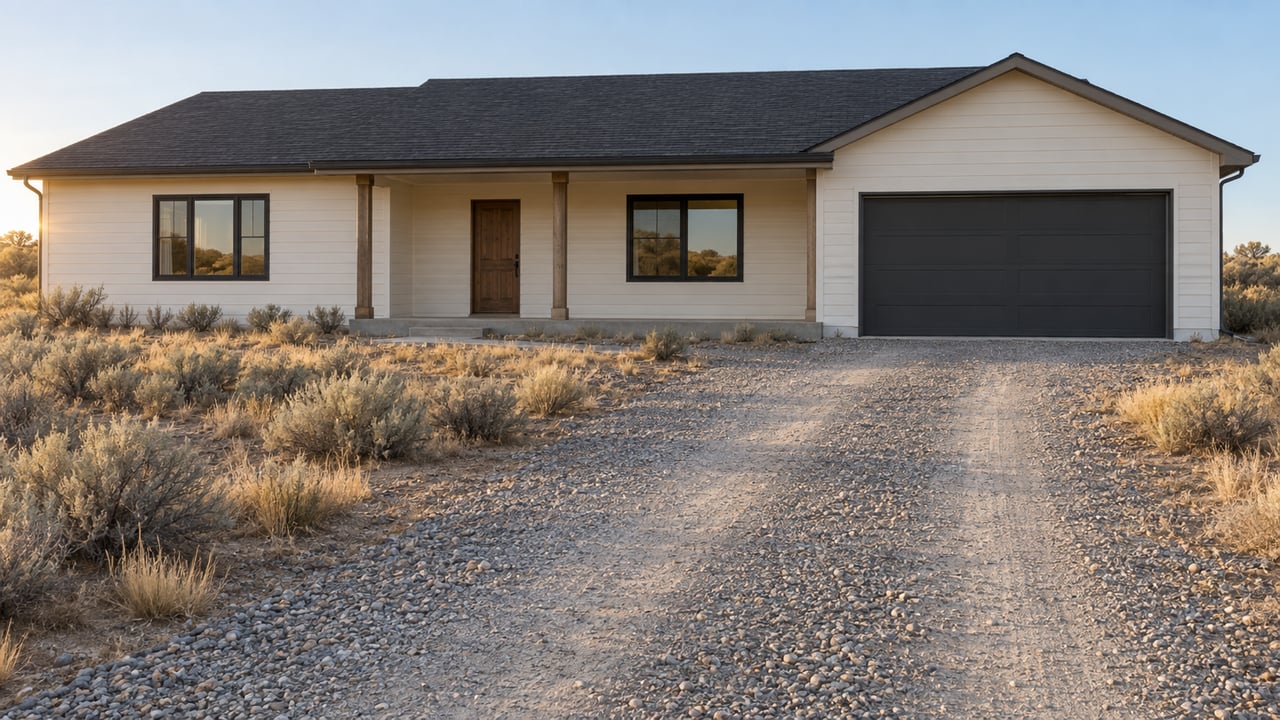
Follow Highway 20 out of Mountain Home toward Anderson Ranch Reservoir and the country changes fast, from subdivision lawns to sagebrush and fence line inside about ten minutes. Somewhere along that stretch sits the kind of parcel a lot of acreage buyers picture when they start looking here: a capped well, an old irrigation share, room for a shop and a few animals. This year, before a sale like that can close, two words on a state order carry more weight than usual: drought emergency.
The headline version of that phrase is the same no matter which parcel you're looking at. What it actually means for your closing timeline depends on which reservoir feeds your water right, which health district office your septic permit routes through, and how old your priority date is. Those details don't show up in a listing description. They show up in the weeks between a signed offer and a signed deed, which is exactly where acreage purchases near Mountain Home tend to stall this year if nobody checked them early.
Idaho Department of Water Resources Director Mathew Weaver signed a statewide drought emergency declaration on April 13, 2026, and Governor Brad Little approved it the same day, covering all 44 counties. The trigger was a winter that ranked as the second warmest in Idaho since 1896, followed by the second warmest March on record, which pushed snowpack to record lows by April 1. The declaration runs through December 31, 2026, unless the director extends or ends it sooner.
What the order actually does is narrower than the headline suggests. It authorizes IDWR to consider applications for temporary changes to an existing water right's point of diversion, place of use, or purpose of use, mainly so agricultural users can move water where it's needed most in a short year. IDWR is clear that the declaration doesn't automatically trigger state or federal financial or disaster assistance on its own. For a home buyer, the practical effect isn't a blanket restriction. It's that the state has formally acknowledged a short water year, and that acknowledgment ripples into permitting offices that don't normally make headlines, including the one that signs off on your septic system.
A drought declaration filed in Boise applies the same words to every county, but it lands on very different plumbing depending on where a parcel sits. The Mountain Home Irrigation District, renamed under that title in 1926, delivers water from a chain built more than a century ago: an 1891 earthen dam on Rattlesnake Creek that formed the original Mountain Home Reservoir, followed by Long Tom Reservoir in 1906 and Little Camas Reservoir in 1908. Together they supply roughly 32,740 acre-feet of water to about 4,400 acres of farmland around town.
Head further down the valley toward Glenns Ferry and the water comes from somewhere else entirely. The King Hill Irrigation District holds two water rights out of the Malad River, one with an 1902 priority date for 300 cubic feet per second and a second from 1909 for 70 cfs, both decreed in 2010 by the Snake River Basin Adjudication Court. The district charges by the acre rather than by volume delivered, so two neighboring farmers with different soil types pay the same rate even though they receive different amounts of water.
That priority date matters more in a year like this one because Idaho water law runs on "first in time, first in right." A right from 1902 gets served before a right from 1990 when supply runs short. So a declaration that reads identically for every county in the state can mean something close to business as usual for a senior right on one system, and a real cutback for a junior right on another, sometimes within a few miles of each other.
There's a local wrinkle worth knowing if a parcel sits near the reservoir itself. As of September 2026, the Boise River Basin reservoirs, including Anderson Ranch, Arrowrock, and Lucky Peak, were reported at roughly 90 percent of their usual level for the season, a notably better picture than the statewide "worst snowpack on record" story would suggest. Anderson Ranch sits close to some Mountain Home acreage listings, but proximity to a healthy reservoir doesn't tell you whether a specific parcel's water right is actually tied to that reservoir, or how senior that right is if it is. The only way to know is to ask, and to get the priority date in writing before the water right becomes part of your decision.
Septic systems in Elmore County are permitted through Central District Health, out of an office on 8th Street North in Mountain Home. CDH has posted that in a low water year, groundwater or runoff monitoring performed for a septic permit may need to be repeated in a future year, because regulators have to confirm that a drainfield keeps the required separation from the water table during normal conditions, not drought conditions. The district's monitoring windows run from February 15 through June 30 for seasonal runoff and April 15 through October 31 for irrigation water, and a site evaluated inside one of those windows during a declared drought year can end up needing a second look once conditions return to normal.
This isn't a new rule invented for this year. It's an old rule about proving normal conditions running headfirst into a year the state has already declared abnormal. For a buyer, the practical effect is timing. A septic feasibility check that would ordinarily clear in a season can stretch into the following year's monitoring window if the evaluation happens to fall during the declared emergency, and there's no way to know that in advance without asking the district directly.
A few questions, asked before an offer goes in rather than after, do most of the work here.
A permit cycle running a few weeks longer than expected is an inconvenience for most buyers. It's a bigger problem for a household relocating under a set report date, or for a family that's already timed the sale of one home against the purchase of another. Neither situation leaves much slack for a septic permit to wait out a monitoring window, or for a water right transfer to sit at the bottom of a stack while a priority date gets confirmed.
A dry year doesn't sink an acreage purchase near Mountain Home. It just means the paperwork on the well, the septic system, and the water right needs to start before the offer does, not after.
If you're weighing a piece of acreage around Mountain Home this fall and want help sorting out which irrigation system it sits on before you write an offer, Mandie Farnworth can walk through it with you. Let's Connect.
Stay up to date on the latest real estate trends.



Clear communication, genuine care, and someone who treats your family like her own, every step of the way. I believe in consistent updates, honest guidance, and finding a home that truly fits your life, not just your budget.